It happens faster than you expect. One day, operations are humming along smoothly. The next, you’re staring at shattered glass, soaked flooring, collapsed ceilings, and power outages. Storm damage can shut down a business in an instant—bringing productivity, sales, and customer service to a screeching halt.
For business owners, the aftermath of a severe storm is not just inconvenient—it can be devastating. But in the face of chaos, what you do next matters. A swift and organized response can dramatically reduce downtime, minimize losses, and preserve your reputation in the eyes of both customers and employees.
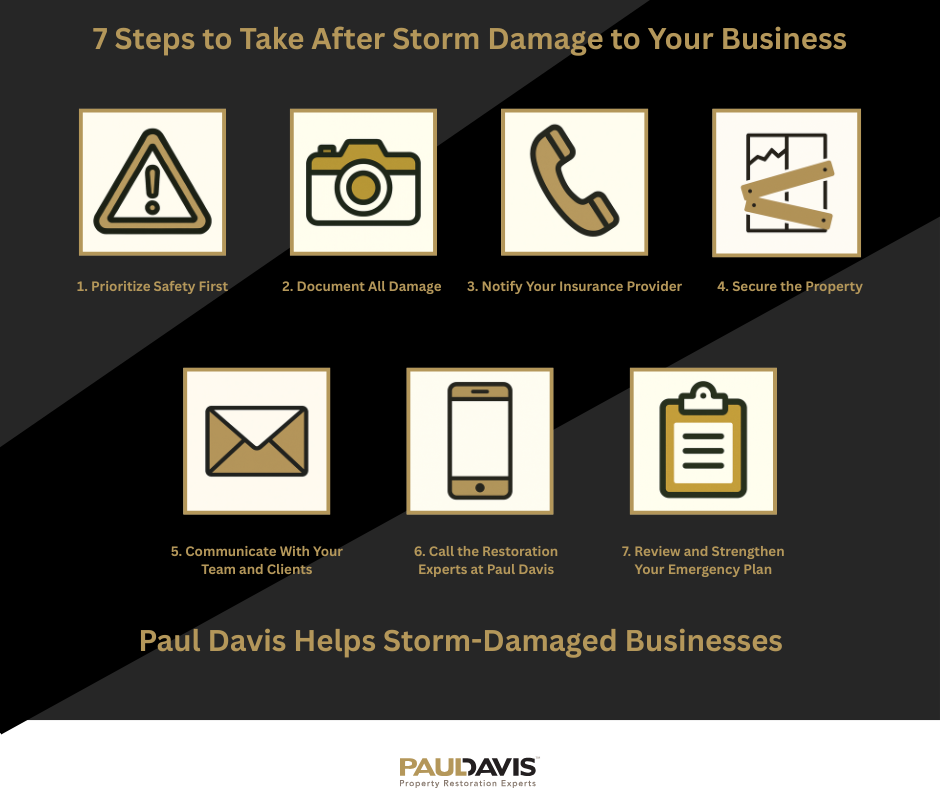
In this post, we’ll walk you through the seven most critical steps to take immediately after storm damage hits your business. Whether you’re dealing with flooding, wind damage, or power outages, these actions will help you get back on your feet—stronger and more resilient than before.

1. Prioritize Safety First
Before inspecting damage or restarting operations, your top priority must be the safety of your staff, customers, and contractors. Storm-damaged buildings can conceal a range of hazards, including downed power lines, broken glass, exposed nails, gas leaks, standing water, or even structural instability.
Do not allow anyone to enter the premises until it has been cleared by emergency personnel or building inspectors. In some cases, local authorities or utility providers may need to secure the area first. Electrical systems, in particular, pose serious risks when mixed with water.
Tip: Keep an updated emergency contact list for local police, fire, medical services, utility providers, and key personnel. Store it in both digital form and printed hard copies in waterproof containers in multiple secure locations.
2. Document All Damage Thoroughly
Once it’s safe to do so, begin documenting every detail of the damage. This is a crucial step that will support your insurance claims and protect your business financially.
Use your smartphone or camera to capture high-resolution photos and videos from multiple angles—both inside and outside the building. Document structural issues like roof collapses or cracked foundations, damaged equipment, soaked office furniture, destroyed inventory, and any signs of water intrusion or mold growth.
Tip: Use digital tools that automatically timestamp your photos and videos to provide proof of when the damage occurred. Organize everything into folders by category (e.g., exterior, interior, equipment, inventory) to make it easier when working with insurance adjusters or restoration professionals.
3. Notify Your Insurance Provider Immediately
Contact your commercial property insurance provider as soon as possible, ideally within 24 hours of the incident. Early communication sets the claims process in motion and helps you avoid unnecessary delays in funding repairs and recovery.
Have your policy number ready and be prepared to provide detailed information about the damage, including photo and video evidence. Keep a record of all conversations with the insurance company, including names of representatives, times and dates of calls, and any instructions given.
Tip: Ask your insurer whether they require you to use pre-approved contractors for cleanup and repair, or if you are permitted to hire your own vendors. This clarification can help prevent delays and misunderstandings in the future.
4. Secure the Property to Prevent Further Loss
Even after a storm has passed, your building may still be susceptible to damage. Rain, wind, or vandalism could cause additional damage if the property isn’t properly secured.
Act quickly to minimize further losses. Board up broken windows and doors, tarp over damaged roofing, and move undamaged equipment or inventory to a safe location. If you can’t remove certain items, consider using waterproof coverings or moving them to elevated areas to avoid flooding.
Tip: Take before-and-after photos of any temporary fixes or protective measures you implement. This shows your insurer that you took reasonable steps to prevent further loss, which may support your claim.
It’s also a good idea to post warning signs around the property to alert others of hazards and deter trespassers.
5. Communicate With Your Team and Clients
In the wake of a disaster, communication is key. Your employees, customers, vendors, and partners all need to know what’s going on—and what to expect next.
Start with your internal team. Send regular updates on when it’s safe to return, what tasks need to be completed, and any adjustments to schedules or roles. For remote workers, it is essential to define expectations and timelines clearly.
Next, notify clients and customers via email, social media, or your website. Be honest about service delays or interruptions and reassure them that you’re taking steps to recover quickly.
Note: Transparency builds trust. A thoughtful message during a difficult time can strengthen your customer relationships and showcase your reliability.
6. Call the Restoration Experts at Paul Davis
Storm cleanup is no time for DIY. Even if the damage seems minor, hidden problems like water trapped behind walls, mold growth, or compromised structural integrity can quickly escalate—costing your business valuable time and money.
That’s why it’s essential to bring in professionals with the training, tools, and experience to handle every aspect of commercial restoration. At Paul Davis, we specialize in helping businesses get back on their feet quickly. Our certified and insured teams are equipped to manage water extraction, mold remediation, structural drying, electrical safety, and full-scale repairs—all while ensuring your property meets local codes and safety standards.
Why Choose Paul Davis?
We offer 24/7 emergency response, detailed damage assessments, and a clear plan of action—so you’re never left in the dark. With over 50 years of experience helping businesses recover from storms and other disasters, we understand the urgency and complexity of your situation.
Don’t leave your recovery to chance. Contact Paul Davis now to minimize damage, expedite your return to normal operations, and restore your peace of mind.
7. Review and Strengthen Your Emergency Plan
Once the dust settles and your business is back in operation, it’s time to reflect on what happened. Every storm is a learning opportunity.
Conduct a full post-mortem: What went well in your response, and what could have been handled better? Did your team know what to do? Were emergency supplies adequate? Did your insurance cover what you expected?
Use this insight to revise your business continuity and disaster recovery plans. Update contact lists, add new emergency protocols, and train your staff with regular drills.
Insight: Businesses that prepare recover faster. They inspire confidence in employees and customers, and often emerge from disasters stronger, more agile, and more resilient.

Paul Davis Helps Storm-Damaged Businesses
Storm damage can turn your business upside down, but with a clear plan and calm execution, you can regain control quickly.
By prioritizing safety, documenting damage, acting promptly with insurance, and maintaining open lines of communication, you’ll be well-positioned to recover efficiently and emerge even stronger.
These seven steps are your blueprint for resilience. Preparation today is the best protection for tomorrow.
If a storm has impacted your business, don’t wait—contact Paul Davis today. Our trusted restoration experts are available 24/7 to help you assess the damage, secure your property, and begin the recovery process immediately. Let us help you rebuild with confidence.